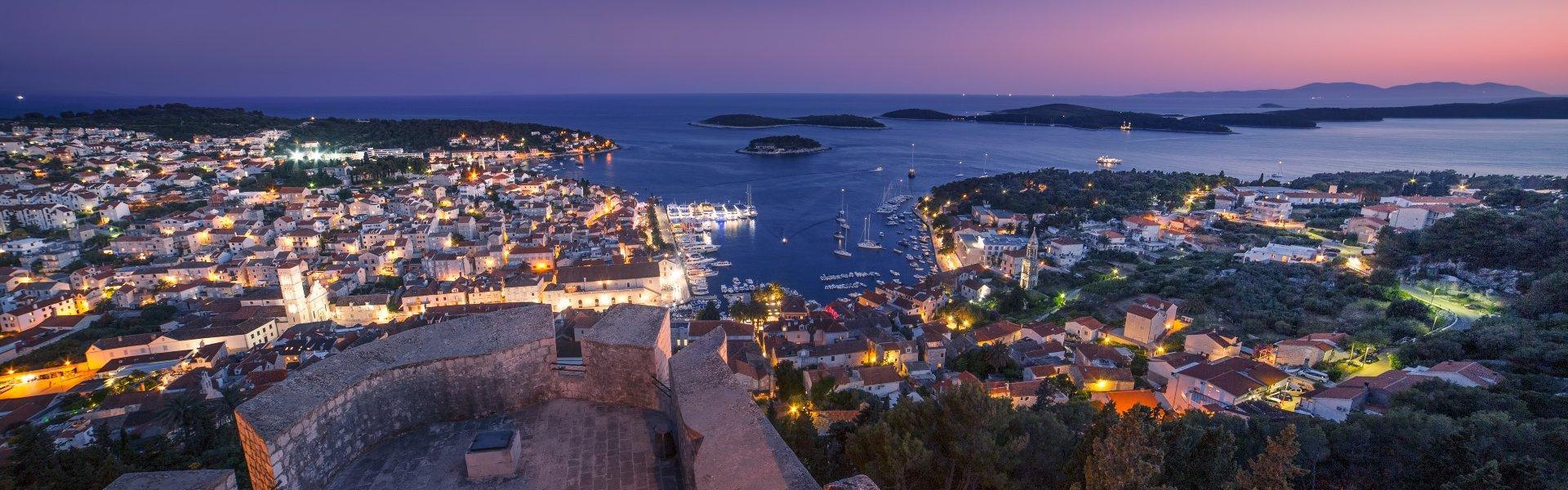



Some places are beautiful while you are there. Others stay with you long after you leave.
Hvar belongs firmly in the second category. Perhaps it is the scent of lavender carried on a warm summer breeze, the colour of the Adriatic at midday or the stone streets that seem made for wandering without a plan. Whatever the reason, one visit rarely feels like enough.
From ancient Stari Grad and glamorous Hvar Town to secluded bays and tiny islands scattered just offshore, Hvar has a habit of giving you another reason to come back every time you think you have seen it all.

Arriving on Hvar is part of the experience
The island adventure begins before you even step ashore.
Hvar lies off the Dalmatian coast between Brač and Vis and is connected to the mainland by ferry and catamaran. If you are travelling with a car, the main ferry route runs from Split to Stari Grad, while another crossing connects Drvenik with Sućuraj on the eastern side of the island.
Whichever route you choose, there is something special about approaching an island from the sea.
The mainland gradually disappears behind you, the Adriatic stretches in every direction and Hvar’s green hills and stone villages slowly come into view.
By the time the ferry reaches the harbour, holiday mode has officially begun.
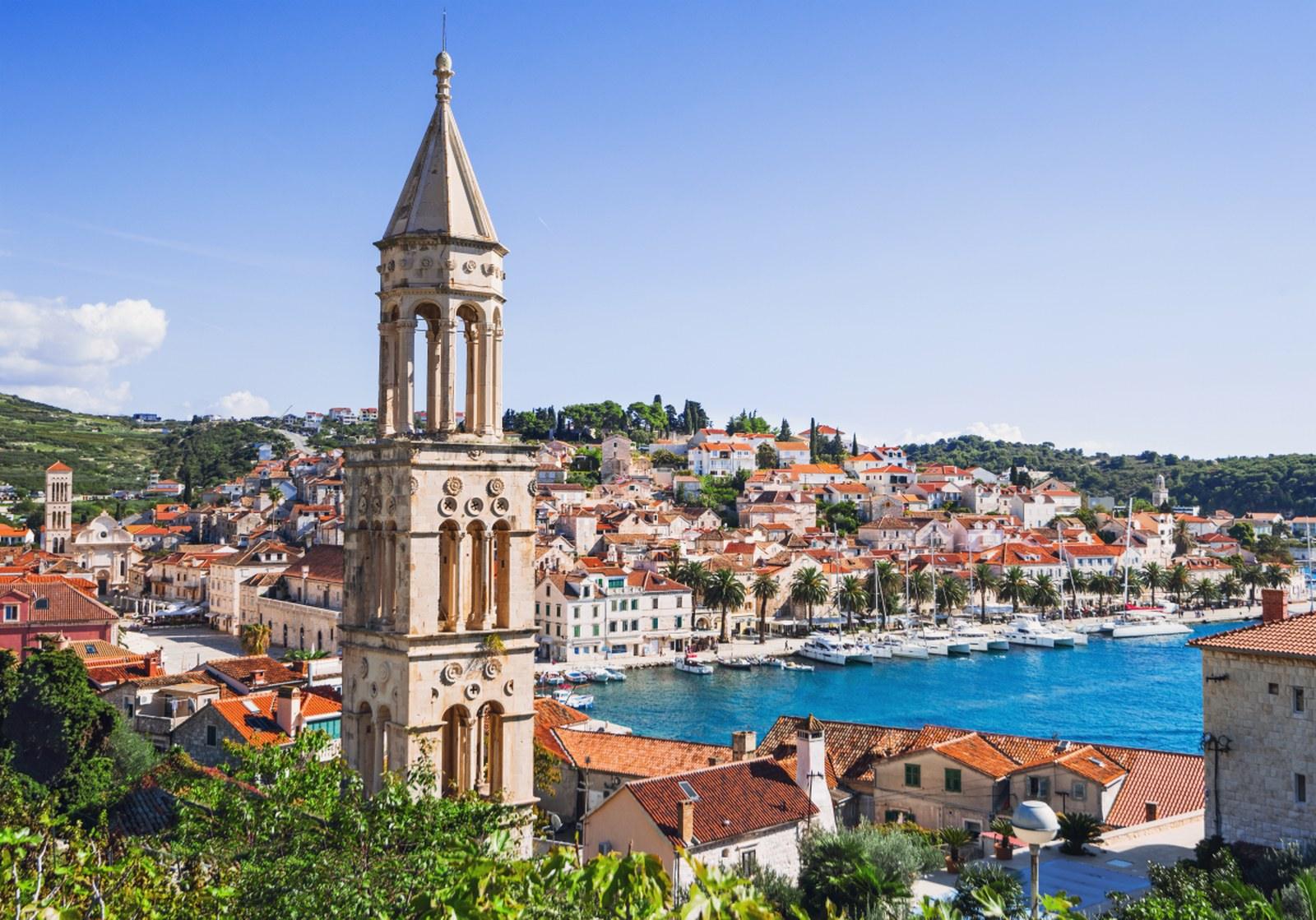
Fall in love with Stari Grad
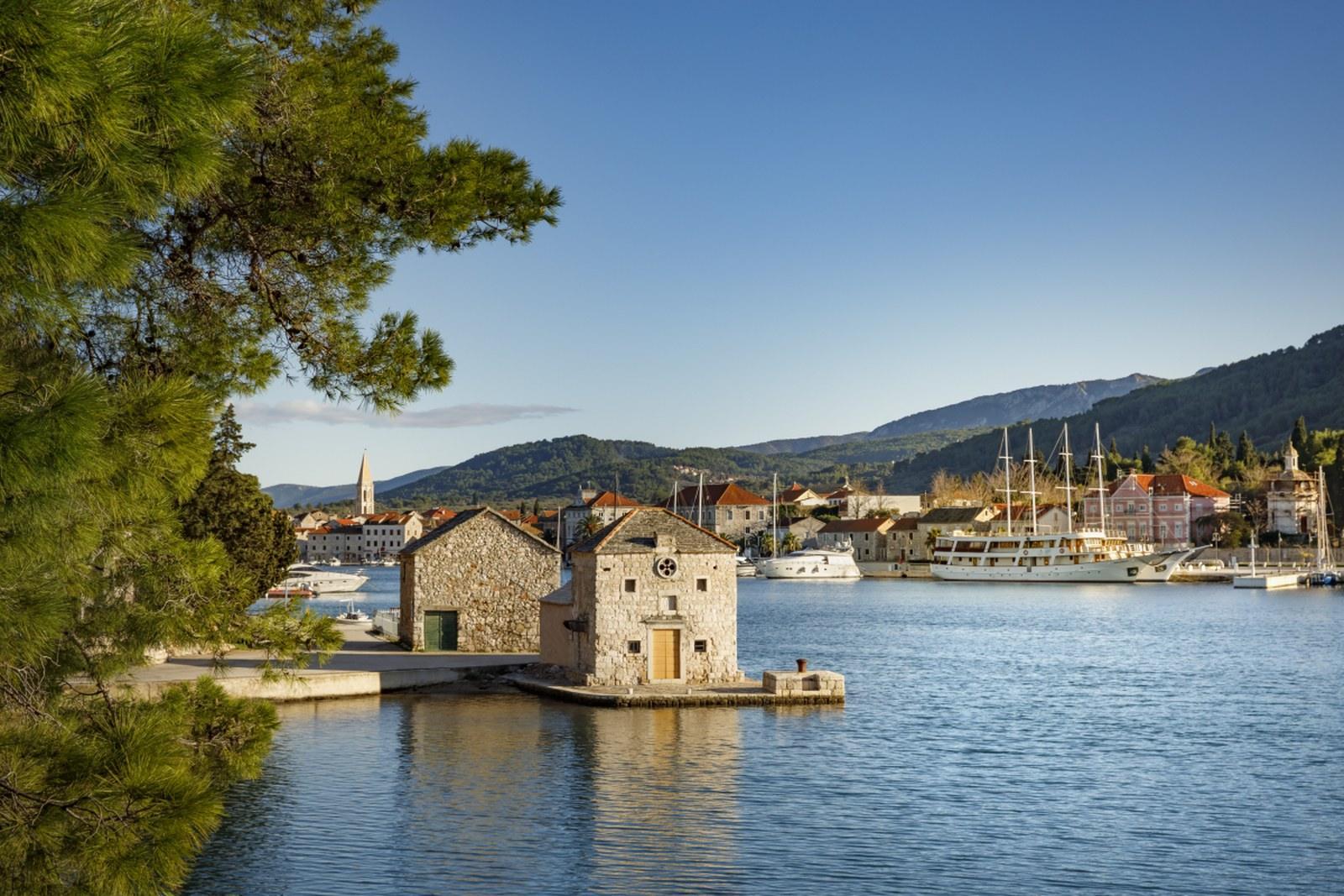
If you want to discover Hvar at its most relaxed, begin in Stari Grad.
Founded by Greek settlers in 384 BC, it is one of Croatia’s oldest towns. Yet despite more than two millennia of history, Stari Grad does not feel like somewhere frozen in time.
Its narrow stone streets lead between little squares, galleries, cafés and traditional houses, while boats gently move in the harbour just metres away.
One of the town’s most important landmarks is Tvrdalj, the fortified summer residence of Renaissance poet Petar Hektorović. Its peaceful courtyard, fishpond and gardens offer a glimpse into the life of one of Hvar’s best-known historical figures.
But Stari Grad is also a place where doing very little feels like the right thing to do.
Find a waterfront table, order coffee and simply watch island life go by.
Walk through 2,400 years of history
Just beyond Stari Grad lies one of Hvar’s most remarkable landscapes.
The Stari Grad Plain was divided into agricultural plots by ancient Greek settlers more than 2,400 years ago. The original system of dry-stone boundaries and paths remains remarkably well preserved, and vines and olive trees continue to grow here today.
UNESCO added the plain to its World Heritage List in 2008, recognising this extraordinary continuity of Mediterranean agriculture.
Explore it on foot or by bike and the landscape reveals another side of Hvar: quiet country roads, vineyards, olive groves, stone walls and little historic buildings scattered through the fields.
It feels worlds away from the busy summer waterfronts, even though the sea is never very far away.

See Hvar Town from above
Then there is Hvar Town – the island’s glamorous side.
Its waterfront fills with yachts during summer, restaurants and bars spill onto stone terraces and the main square becomes a natural meeting point from morning until late at night.
But before settling in for an evening by the harbour, look up.
High above town stands Fortica Fortress, also known as Španjola. The 16th-century fortress is reached by climbing through Hvar’s old streets and Mediterranean gardens, and the view from the top is worth every step.
Below you lies the entire town, its harbour and the intense blue Adriatic, while the Pakleni Islands stretch across the horizon.
It is one of those views that photographs beautifully – and still looks better in person.
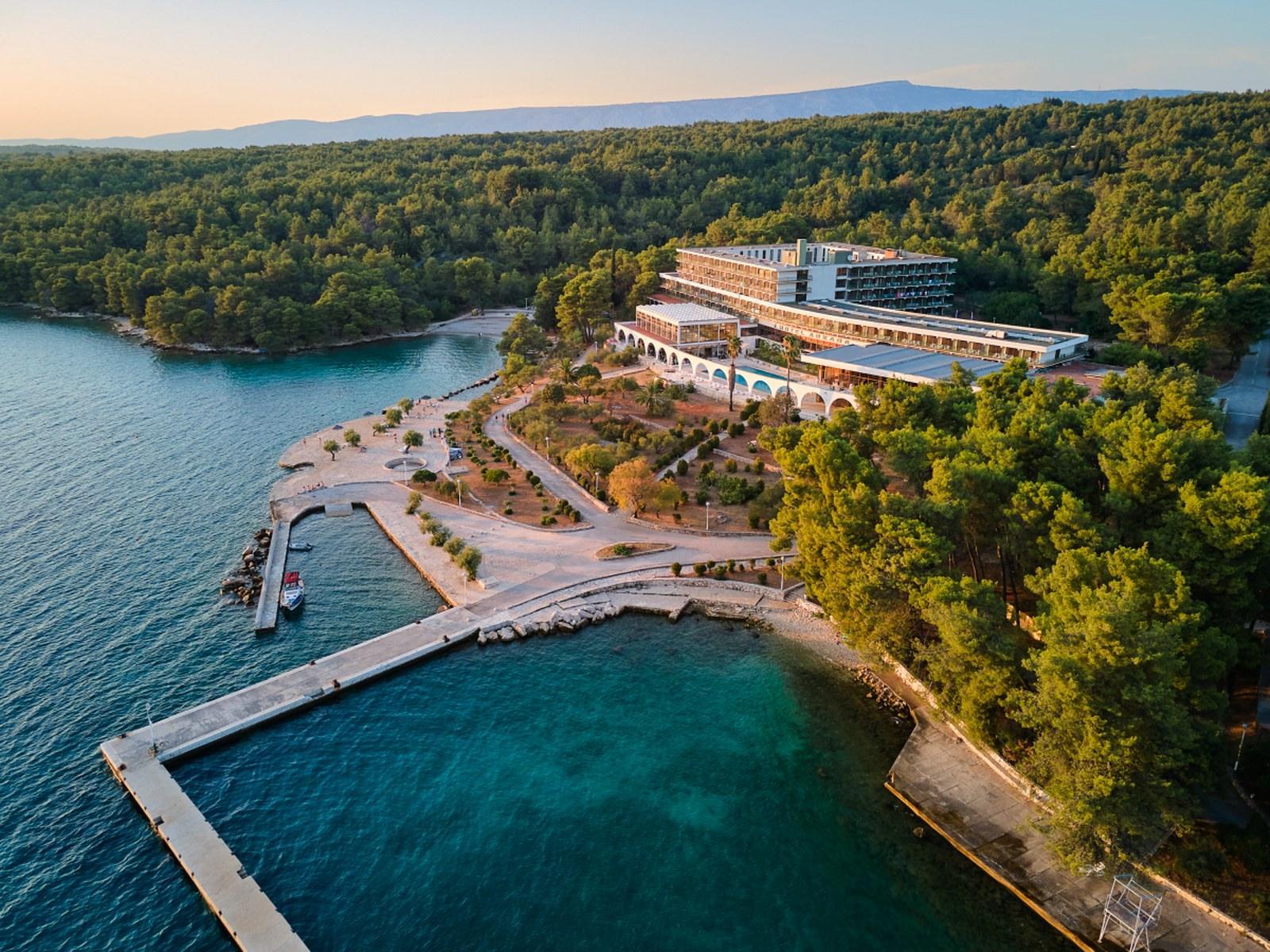
Escape to the Pakleni Islands
When the summer heat arrives, follow the locals’ example and head for the sea.
Just off Hvar Town lies the Pakleni Islands, an archipelago of around twenty islands, islets and rocks surrounded by wonderfully clear water.
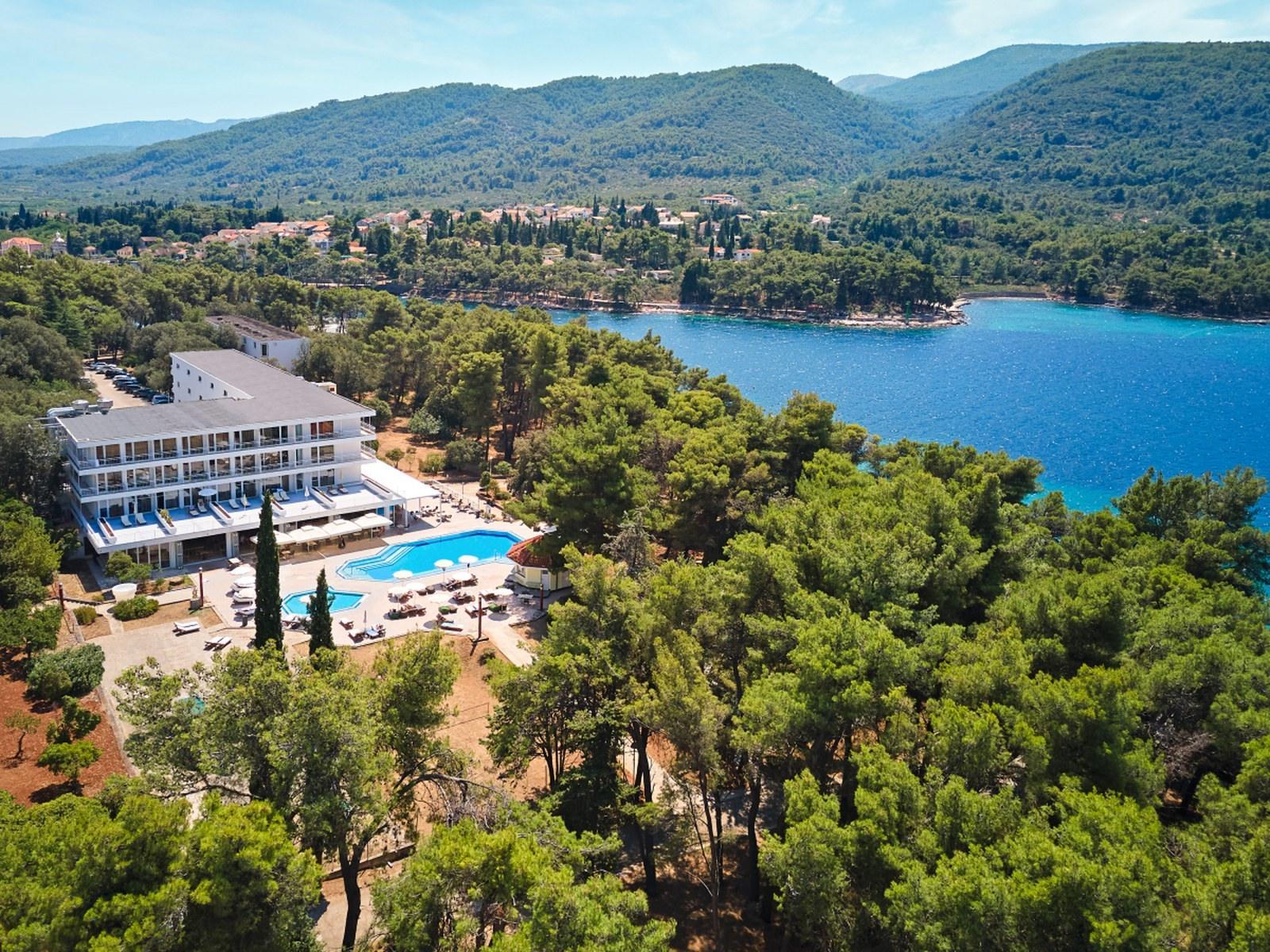
Some bays are home to beach clubs and restaurants; others are quiet enough that your only plan for the afternoon needs to be swimming, snorkelling and finding somewhere beneath the pine trees to dry off.
Taxi boats make it easy to reach popular spots, or you can hire a boat and spend the day finding your own coves.
Palmižana on Sveti Klement is one of the best-known destinations, but the real pleasure is not necessarily ticking off particular places.
It is having nowhere you need to be.
Follow Hvar’s lavender-scented roads
Hvar is often called the lavender island, and head inland in early summer and you will understand why.
Around traditional villages such as Velo Grablje, lavender grows among dry-stone walls, olive trees and rugged Mediterranean vegetation. During flowering season, splashes of purple transform the otherwise sun-bleached landscape.
The villages themselves are equally worth discovering.
Leave the main coastal roads behind and Hvar becomes quieter and more traditional. Old stone houses, vineyards and small family farms replace busy promenades, giving you a glimpse of the island beyond its famous beach-and-nightlife image.
Stop for lavender products, local honey or olive oil and you may find that the drive itself becomes one of your favourite Hvar memories.

Taste the island
It would be difficult to understand Hvar properly without sitting down at the table.
Island cuisine is rooted in the Mediterranean: fresh fish and seafood, olive oil, herbs, vegetables, cheeses and dishes prepared slowly and simply.
Then there is the wine.
Vineyards have shaped Hvar’s landscape for centuries, and exploring the island’s wineries is an excellent way to discover both its flavours and the people behind them. Private wine tours currently form part of Hvar’s wider experience offer, alongside island hopping and outdoor adventures.
The best meals often come with very little ceremony: a table overlooking the sea, local wine in your glass and something fresh from the grill.
You tell yourself you will only stay for lunch.
Three hours later, nobody is particularly concerned about the time.
Find a beach and forget the rest of the day
Of course, sometimes exploring can wait.
Hvar’s coastline is filled with pebble beaches, rocky swimming spots and secluded coves backed by pine trees. Some are easy to reach; others require a walk, drive or boat ride.
That extra effort is often part of the appeal.
Once you find a quiet stretch of coast and see just how clear the water is, plans for the rest of the afternoon tend to disappear rather quickly.
Swim, read, order something cold and watch the boats pass in the distance.
Tomorrow will still be there for sightseeing.
One visit to Hvar is never really enough
Perhaps that is Hvar’s greatest trick.
You arrive planning to see Stari Grad, Hvar Town and a few beaches. Then you discover the Pakleni Islands. Someone tells you about a vineyard you should visit. You spot a road leading towards a village you have never heard of. A local recommends a hidden cove.
And suddenly the list of things you have not seen is longer than when you arrived.
So you leave Hvar with photographs, a little lavender in your suitcase and one very predictable thought: Next time, we’ll stay longer.


