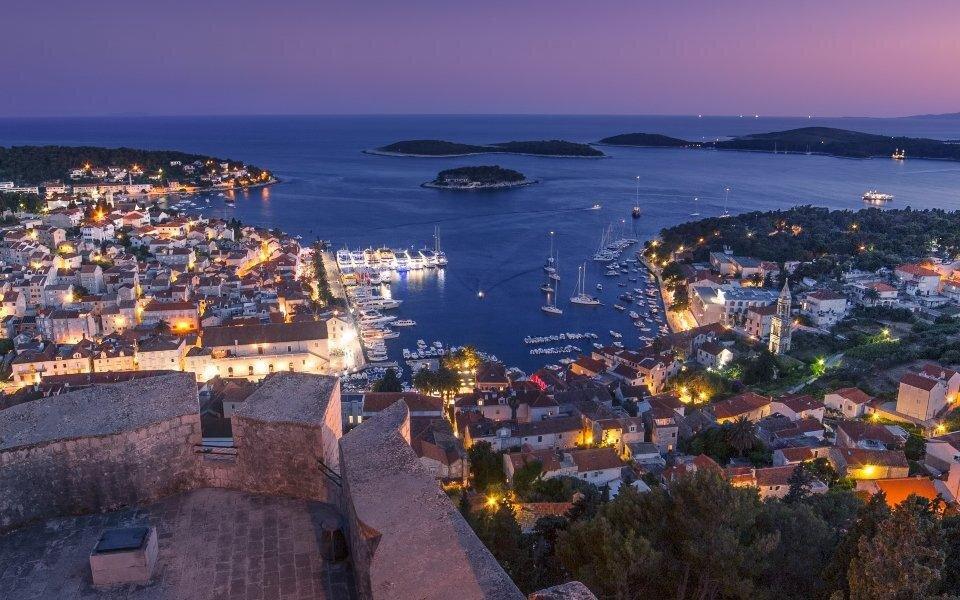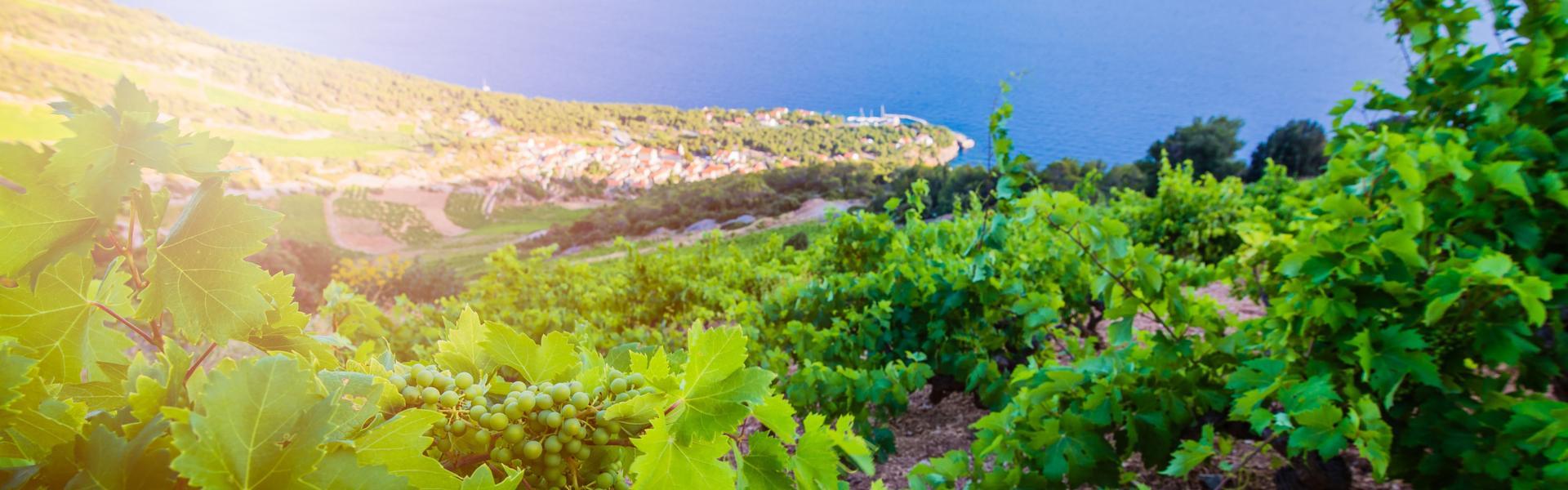



Hvar may be famous for its beaches, lavender fields and long summer evenings, but there is another side of the island that deserves just as much attention – its wine.
Vineyards have shaped Hvar’s landscape for more than 2,400 years, stretching from the fertile Stari Grad Plain to steep southern slopes overlooking the Adriatic. Today, family wineries continue that tradition with indigenous grape varieties, contemporary winemaking techniques and tasting rooms where every glass comes with a story.
For anyone who believes that the best way to understand a destination is through its food and wine, Hvar is an island worth exploring one vineyard at a time.

A wine tradition more than 2,400 years old
Wine on Hvar is anything but a modern trend.
When ancient Greek settlers arrived on the island in 384 BC, they planted vines in the fertile landscape around present-day Stari Grad. More than two millennia later, grapes are still cultivated within the same agricultural landscape.
The UNESCO-listed Stari Grad Plain is perhaps the clearest reminder of this extraordinary continuity. Ancient stone walls still divide vineyards and olive groves into parcels first laid out by the Greeks.
But Hvar’s vineyards are not limited to the plain.
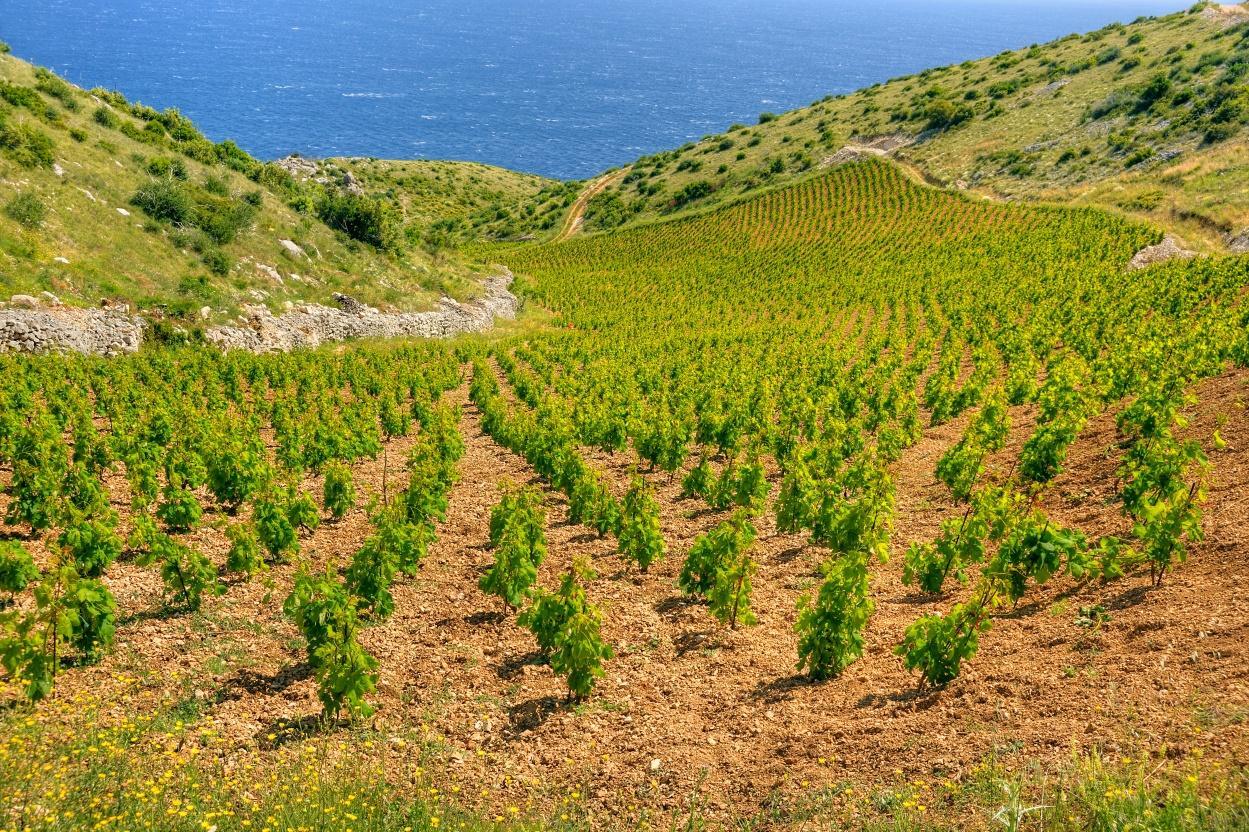
Drive across the island and you will see vines growing on terraces, hillsides and dramatic southern slopes where the land drops towards the sea. The Mediterranean climate, abundant sunshine, limestone-rich soil and proximity to the Adriatic all help give Hvar wines their distinctive character.
Here, wine is not simply something produced on the island.
It is part of Hvar’s identity.
Meet Hvar’s signature grape varieties
A wine journey across Hvar inevitably begins with Plavac Mali.
This celebrated Dalmatian red grape thrives particularly well on the island’s sun-drenched southern slopes. It produces powerful, full-bodied wines characterised by dark fruit, Mediterranean herbs and spice.
For white wine lovers, there is Bogdanuša.
Its name is traditionally interpreted as the wine given by God, and the grape is closely associated with Hvar. Bogdanuša produces fresh, elegant white wines with delicate aromas that feel particularly appropriate on a warm island afternoon.
You may also encounter varieties such as Prč, Darnekuša, Pošip, Maraština and Rukatac, depending on the winery and part of the island you visit.
The best approach?
Do not choose just one.

Visit Hvar’s family wineries
One of the best things about wine tasting on Hvar is the opportunity to meet the people behind the bottle.
Many of the island’s wineries are family businesses where knowledge has been passed down through generations. Tastings often combine local wines with stories about vineyards, grape varieties, family traditions and the challenges of cultivating vines on an island.
In Jelsa, Tomić Winery is one of Hvar’s best-known names. Its striking tasting room was inspired by the cellars of Diocletian’s Palace, creating an atmospheric setting in which to discover both traditional and contemporary Hvar wines.
Nearby, Duboković Winery offers another interpretation of the island’s terroir, while Carić Winery works with several indigenous varieties, including Plavac Mali, Bogdanuša, Prč and Darnekuša.
Each cellar tells the Hvar wine story a little differently.

Taste Plavac Mali above the Adriatic
For one of Hvar’s most dramatic wine landscapes, head towards the southern side of the island.
Around villages such as Sveta Nedjelja, vineyards cling to steep slopes overlooking the open Adriatic. The combination of intense sunshine, rocky terrain and sea air creates demanding conditions for growers – but also some of the island’s most distinctive wines.
This is Plavac Mali country.
Zlatan Otok Winery, associated with the Plenković winemaking family, is one of the best-known producers in the area. Its vineyards are dominated by Plavac Mali, alongside white varieties including Pošip and Bogdanuša. The winery is also known for its unusual wine cellar connected with the sea.
Sitting with a glass of red wine while looking out across the Adriatic makes it remarkably easy to understand why wine tourism on Hvar is about far more than tasting what is in the glass.
The landscape is part of the experience.
Discover wine in the heart of the island
Hvar’s inland villages offer yet another side of the wine story.
Places such as Svirče, Vrbanj, Vrisnik and Vrboska are surrounded by vineyards and agricultural landscapes that have sustained island communities for generations.
The Svirče Agricultural Cooperative is particularly associated with Ivan Dolac wine and has played an important role in bringing together grapes and wine production from local growers.
Nearby, smaller producers continue experimenting with indigenous grapes and different winemaking approaches.
Some wineries are increasingly returning to traditional techniques such as spontaneous fermentation, maceration and amphora ageing, combining centuries of heritage with a new generation of ideas.
This blend of old and new is one of the most exciting things about Hvar’s wine scene today.

Pair Hvar wine with local food
Wine tastes even better when there is something good on the table.
Fortunately, Hvar has that part covered too.
Fresh fish, octopus, shellfish, local cheeses, olives, seasonal vegetables and Dalmatian pršut all pair naturally with the island’s wines.
A crisp Bogdanuša works beautifully alongside lighter seafood dishes, while the structure and intensity of Plavac Mali make it a natural partner for grilled meat, mature cheeses and richer Mediterranean flavours.
Hvar restaurants frequently showcase the island’s wines alongside locally inspired cuisine, making it easy to continue your wine exploration long after you leave the cellar.
Sometimes the most memorable tasting is not a formal one at all.
It is a bottle of local wine, a simple dinner and a table overlooking the sea.
Make wine tasting part of your Hvar itinerary
You do not need to be an expert to enjoy wine tasting on Hvar.
In fact, that is part of its appeal.
Visit a cellar and ask questions. Try a grape variety you have never heard of. Compare a fresh white from the Stari Grad Plain with a powerful red grown on the southern slopes.
Many wineries offer tastings, cellar visits and vineyard experiences, although booking ahead is advisable, particularly during the busy summer season. Spring and autumn are especially attractive times for wine-focused visits, with pleasant temperatures and plenty of activity in the vineyards.
And if you would rather leave the driving to someone else, organised wine tours provide an easy way to visit several producers while learning more about the island’s winemaking heritage.
Meet Hvar’s signature grape varieties
Perhaps wine is such a natural fit for Hvar because both reward the same approach.
Slow down.
Take the scenic road through the vineyards. Stop in a village you had not planned to visit. Talk to the winemaker pouring your glass. Stay for another plate of local cheese.
Hvar’s wine story has been developing for more than two thousand years.
There is really no reason to rush through it.